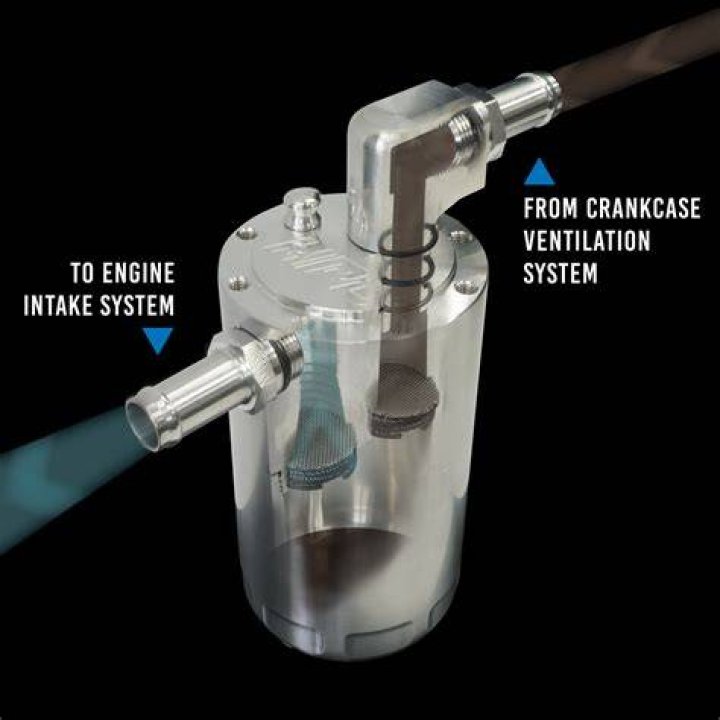
Accordingly, does a catch can need a breather?
The catch can is simply a place for oil and oil/vapor to go, instead of back into your intake. The reason people are using a filtered breather is to keep oil/vapor from condensing inside of their engine bays. The catch can is simply a place for oil and oil/vapor to go, instead of back into your intake.
Furthermore, do you need a PCV valve with a catch can? You don't want any oil back in the intake system. The purpose of the non-vented catch can is to keep vacuum on the crankcase while still separating the oil from the air. That's great for n/a cars. Once you go into boost, the PCV valve will close, blocking the passenger side valve cover from doing any venting at all.
Herein, how do you hook up a catch can?
To get started installing, run lines from each vent on the LS valve covers which will route up to the catch can that has fittings on either side. The catch can will be mounted somewhere in the engine bay. The catch can will be mounted to the bracket that secures the remote thermostat housing in place.
Does a catch can add horsepower?
A typical catch can plugs into a hose running from the top of your engine's crankcase to the intake manifold. These contaminants can build up inside the intake; when left unchecked, this buildup can hurt fuel economy and horsepower, and can even cause misfires.
Related Question Answers
Is a Catch Can worth it?
The answer is yes. While a catch can won't stop every last particle of contaminant from entering the intake manifold and coating the valves in a direct-injection engine, the less unwanted buildup the better. So, yes, a catch can isn't a bad idea. At a minimum, it's not a scam.Is oil catch can really needed?
It should be noted that oil catch cans are only really necessary for direct injection engines. Unlike other engines, direct injection engines do not have fuel regularly cleaning the valves and are therefore more likely to experience the formation of carbon deposits.Do oil catch cans increase performance?
Power numbers will be low, as blow by pressure will have a significantly harder time exiting the head than when sucked out by the catch can. The result is the following: catch cans will have an impact on your racing speed. They keep engines clean and vent power robbing pressure from your engine's cylinder heads.Can a catch can cause problems?
For this reason, curing 'maybe/nonexistent' problems is a bad idea. Curing the nonexistent problem of oil blow-by with a catch can, which pressures up the system and blows a seal, allowing sump oil to escape could have the nasty feedback effect of catastrophic engine failure, and you will not be covered by warranty.Is an oil separator worth it?
Excess blow-by up can eat away at an engine's components and deteriorate the benefits of all of your hard work and dedicated maintenance. The addition of an oil separator is a tremendous help in protecting your trucks most valuable asset and keep your F150 running at peak performance.Do catch cans void warranty?
Basically Toyota have made it known that fitting a catch can will void any warranty claims relating to a host of repairs to various seals and back pressure related parts on engines and turbos.What's the purpose of a catch can?
An oil catch tank or oil catch can is a device that is fitted into the cam/crankcase ventilation system on a car. Installing an oil catch tank (can) aims to reduce the amount of oil vapors re-circulated into the intake of the engine.Do breather filters add horsepower?
When your air filter is clogged then your vehicle suffocates, in a sense. In fact, a high flow air filter can actually increase your horsepower by about 3 to 5 HP and increase your torque as well. At the same time, this can lead to increased fuel efficiency.Why do valve covers need breathers?
Herein lies the reason and function of the valve cover breathers. The blow by builds up in the oil pan as the combustion passes the rings. The prerequisite for proper operation of a valve cover breather is first to allow the release of internal pressure in the engine to be vented to the intake manifold.Which oil catch can is the best?
The 10 best oil catch cans Reviews- Ruien 0046 Universal Aluminum Oil Catch Can.
- Ruien Universal 350ml Oil Catch Can with Baffled Reservoir.
- Ruien Universal 350ml Oil Catch Can Tank.
- EVIL ENERGY Polish Baffled Universal Oil Catch Can.
- Mishimoto MMOCC-RB Oil Catch Can.
- Mishimoto Compact Baffled Oil Catch Can, 2-Port.
How does a vented oil catch can work?
So these crankcase gasses are vented through the PCV system which recycles the gases back into the intake air stream to be burned. When dirty crankcase gasses pass through the catch can, oil and other condensed material collects in the bottom. This oil would otherwise be digested by the engine's combustion process.Will fitting an oil catch can void my warranty?
While fitting an oil catch to your vehicle will not void your warranty we do not recommend modifications are made to our vehicles. I've been holding off fitting one until the warranty is up.What does an oil breather cap do?
To prevent a vacuum being created, the blow-by gases are replaced by fresh air using a device called a breather. The breather is often located in the oil cap. As per the earlier engines, the road draught tube system also created pollution and objectionable odours.What is a PCV catch can?
Since the oil catch cans condense the vapor portion of the gasses, they will need to be drained periodically of all the oil, fuel and other contaminants. A PCV (Positive Crankcase Ventilation) system exists to help counter this problem and expel the gases out of the crankcase and back into the intake manifold.Are oil catch cans illegal?
Are they legal to install and still pass a visual and smog test here in California? Answer: Unfortunately, installing an oil catch can will cause your vehicle to fail the smog inspection. The oil catch can is placed before the PCV valve and used to prevent crankcase oil from entering the intake manifold.What is a catch can for turbo setup?
What is an oil catch can? A catch can is essentially an oil separator. It is designed to remove the oil from the blow-by gasses and prevent them from entering the intake system.Does catch can size matter?
Catch cans come in different sizes to hold more or less oil. Different companies will make their own filter medium and inlet designs, and some serious performance applications may have baffles inside to absolutely prevent any oil in the can from sloshing around and returning through the outlet.Is a catch can legal?
Catch can legalitiesCatch can's are 100% legal, and on some well designed diesels they actually come as standard. Sadly, this isn't the case for your average 4WD motor. In the past, people would just run a pipe to the inside of their chassis, and let the oil film run into the chassis, for 'rust prevention'!